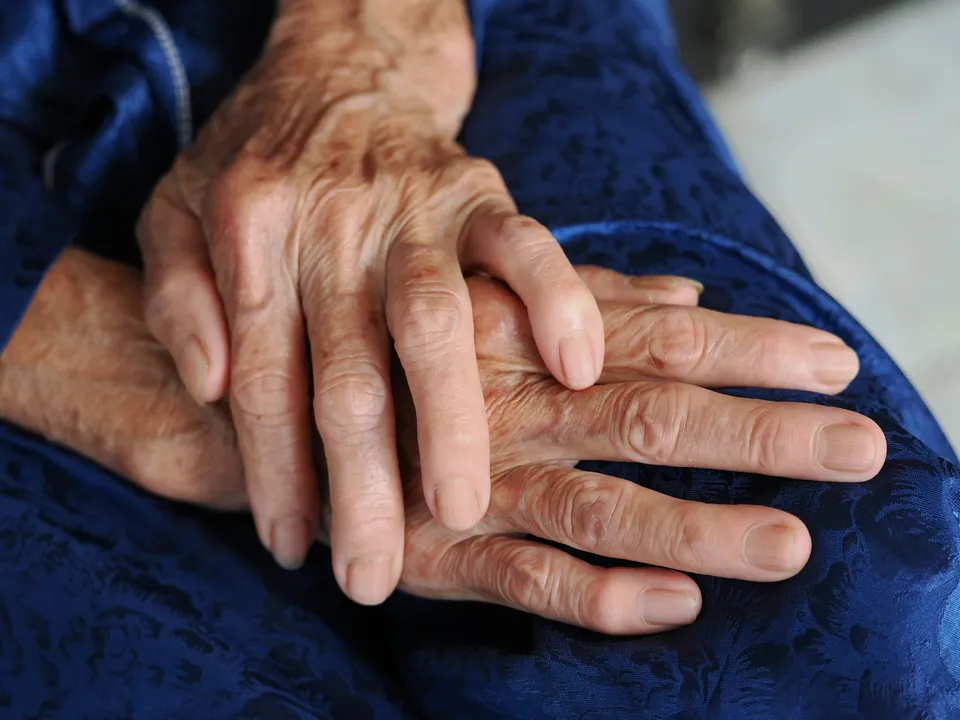
Paraffin bath and rheumatoid arthritis
The paraffin bath is recommended as complementary thermotherapy for rheumatoid arthritis and fibromyalgia. Cochrane review and protocol.
Rheumatoid arthritis affects approximately 1% of the global population. More rare but more debilitating than osteoarthritis, it attacks the joints of the hands, wrists and feet through inflammatory flares. Fibromyalgia affects up to 2% of the population, mainly women, with chronic widespread pain that resists standard painkillers.
For these chronic conditions, the paraffin bath is not a disease-modifying treatment. But it is one of the most widely used non-drug approaches in rehabilitation to relieve hand pain and stiffness. The Cochrane review on thermotherapy confirms this. If you are unfamiliar with this treatment, start with our complete paraffin bath guide.
Understanding rheumatoid arthritis
An autoimmune disease that attacks the joints
Rheumatoid arthritis is a chronic inflammatory disease of autoimmune origin: the immune system mistakenly attacks the synovial membrane lining the inside of joints. Inflammation sets in, cartilage and bone progressively erode, and joints eventually become deformed.
Typical symptoms
- Prolonged morning stiffness (often more than one hour, compared to 15 to 30 minutes for osteoarthritis)
- Symmetrical joint pain in hands, wrists and fingers
- Swelling of the metacarpophalangeal joints (at the base of the fingers) and proximal interphalangeal joints (middle of the fingers)
- Intense fatigue and sometimes low-grade fever during active phases
- Characteristic deformities at advanced stages (boutonniere, swan-neck, ulnar deviation)
Rheumatoid arthritis vs osteoarthritis: the confusion to avoid
Many confuse these two diseases because they both affect the hands and cause pain and stiffness. The distinction is essential:
- Osteoarthritis is mechanical, linked to wear and age. It mainly affects the fingertip joints and the thumb base.
- Rheumatoid arthritis is inflammatory, can start at any age (often 30-50), is symmetrical and first affects the joints at the base of the fingers.
If you are looking for information on hand osteoarthritis instead, see our dedicated article.
How the paraffin bath relieves rheumatoid arthritis
The mechanism: deep heat and softening
When you dip your arthritic hands into melted paraffin (between 45 and 54 C), the wax solidifies into a uniform layer that moulds to every joint. This warm coating maintains a constant temperature for 15 to 20 minutes, and the heat penetrates deep into the peri-articular tissues.
The effects on rheumatoid arthritis symptoms:
- Muscle relaxation: the finger flexor muscles, contracted by pain, release
- Improved mobility: heat increases tissue viscoelasticity, reducing morning stiffness
- Analgesic effect: heat raises the pain perception threshold, temporarily relieving the joints
- Preparation for exercises: this is the ideal time to gently mobilise the fingers without pain
What the official recommendations say
The Cochrane review: thermotherapy and rheumatoid arthritis
The major scientific reference on this topic is Cochrane review CD002826, which evaluated thermotherapy for rheumatoid arthritis. Its conclusion is clear: thermotherapy, including the paraffin bath, can be used as palliative therapy or as complementary therapy combined with exercises for patients with rheumatoid arthritis. Paraffin baths combined with exercises are particularly recommended for short-term benefits on arthritic hands.
2022 meta-analysis: paraffin and hand conditions
A more recent meta-analysis, published in 2022, confirmed the effectiveness of the paraffin bath in reducing pain and improving function in hand conditions, including rheumatoid arthritis, osteoarthritis, and carpal tunnel.
Effectiveness of paraffin bath therapy for the symptoms and function of hand diseases
Read on PubMed
Paraffin bath and fibromyalgia
Widespread pain with multiple facets
Fibromyalgia is a chronic widespread pain syndrome, accompanied by fatigue, sleep disturbances and cognitive difficulties. Unlike rheumatoid arthritis, there is no visible joint inflammation: the pain originates from central nervous system hypersensitivity.
Thermotherapy in fibromyalgia recommendations
EULAR recommendations for fibromyalgia management include non-pharmacological approaches, including thermotherapy, among the options to offer patients. The deep heat of the paraffin bath provides temporary relief from hand and wrist pain, frequently affected in fibromyalgia. Many patients report real comfort, especially in an evening routine to help with sleep.
Important: no approach "cures" fibromyalgia. The paraffin bath is one comfort tool among others, to be integrated into a comprehensive management plan that includes adapted physical activity, stress management and medical follow-up.
Protocol: paraffin bath for rheumatoid arthritis and fibromyalgia
Before the session
- Check that you are in a calm phase, not in the middle of an inflammatory flare
- Wash and dry your hands
- Remove rings, bracelets and watch
- Paraffin temperature between 45 and 54 C, thermostat-regulated on a device like the TheraDawn
During the session
- Dip the hand for 2 to 3 seconds into the paraffin
- Remove and let the wax set for a few seconds
- Repeat 4 to 6 times to form a thick, uniform layer
- Wrap in a plastic bag then an insulating mitten
- Wait 15 to 20 minutes, ideally lying down and relaxed
- Remove the wax which peels off in one piece, and put it back in the tank
After the session: gentle exercises
This is the key moment. The Cochrane review is explicit: it is the combination of paraffin + exercises that gives the best results. Take advantage of the restored flexibility to:
- Open and close the fist slowly (10 repetitions)
- Thumb-to-finger opposition (10 repetitions)
- Gentle finger stretching in extension on a flat surface
- Wrist flexion and extension (10 repetitions each side)
All movements must remain pain-free. With rheumatoid arthritis, never force. The goal is to maintain mobility, not to regain it by force.
Recommended frequency
- Calm phase: 2 to 3 sessions per week, ideally in the morning to reduce morning stiffness
- Maintenance phase: 1 to 2 sessions per week
- During a flare: stop paraffin, use cold until the inflammation subsides
Contraindications and essential precautions
For rheumatoid arthritis and fibromyalgia, certain precautions are particularly important:
- Acute inflammatory flare: red, hot, swollen and painful joint at rest. Heat is contraindicated as long as the acute phase lasts. Use cold for 48 to 72 hours.
- Open or ulcerated rheumatoid nodules on the area
- Skin lesions related to treatment (methotrexate, biologics can weaken the skin)
- Circulatory disorders often associated (severe Raynaud's phenomenon, rheumatoid vasculitis)
- Loss of sensation (diabetic or rheumatoid neuropathy): risk of undetected burns
If in doubt, seek advice from your rheumatologist or physiotherapist before starting a home protocol. The paraffin bath can also relieve other forms of joint pain.
Frequently asked questions
Is a paraffin bath effective against rheumatoid arthritis?
Yes, as a complement. The Cochrane review on thermotherapy for rheumatoid arthritis concludes that paraffin baths combined with exercises provide short-term benefits for pain and mobility in arthritic hands. It is not a disease-modifying treatment, but a validated palliative approach.
What is the difference between rheumatoid arthritis and hand osteoarthritis?
Osteoarthritis is a mechanical degradation of cartilage linked to age and wear. Rheumatoid arthritis is an autoimmune disease where the immune system attacks the synovial membrane of joints, causing chronic inflammation and deformities. Both cause hand pain and stiffness, but their underlying treatments are very different. The paraffin bath relieves symptoms of both.
Can you do a paraffin bath during a rheumatoid arthritis flare?
No, not during an acute inflammatory flare (red, hot, very swollen, painful joint at rest). Heat worsens inflammation in the acute phase. Use cold (gel pack) for 48 to 72 hours, then resume paraffin when the flare subsides to loosen stiff joints.
Can a paraffin bath help with fibromyalgia?
EULAR recommendations for fibromyalgia include thermotherapy among useful non-pharmacological approaches. The paraffin bath, by providing deep soothing heat, can temporarily relieve hand and wrist pain associated with fibromyalgia. It does not treat fibromyalgia itself but provides real comfort, especially in an evening routine.
How many sessions does it take to relieve rheumatoid arthritis?
The standard rehabilitation protocol is 3 sessions per week for 4 weeks, followed by gentle range-of-motion exercises. Stiffness relief is felt from the first sessions. At home, you can maintain 2 to 3 sessions per week during calm phases, stopping during flares.
Does a paraffin bath replace rheumatoid arthritis medication?
Absolutely not. Rheumatoid arthritis requires disease-modifying treatment prescribed by a rheumatologist (methotrexate, biologics, etc.) to slow the disease. The paraffin bath is a complementary treatment that relieves stiffness and pain, but it does not slow disease progression. Never modify your treatment without medical advice.
Key takeaways
The paraffin bath for rheumatoid arthritis is a complementary approach validated by the Cochrane review and international recommendations. It does not replace disease-modifying treatment prescribed by the rheumatologist, but it effectively relieves hand pain and stiffness during calm phases.
The key is the combination of paraffin + gentle exercises, integrated into a regular routine outside flares. For fibromyalgia, it is one comfort tool among others in comprehensive management. In both cases, a home device allows you to follow the rehabilitation protocol at your own pace, alongside physiotherapy sessions.
Disclaimer: this article is provided for informational purposes only and does not replace medical advice. If you experience persistent pain, consult your doctor or physiotherapist.