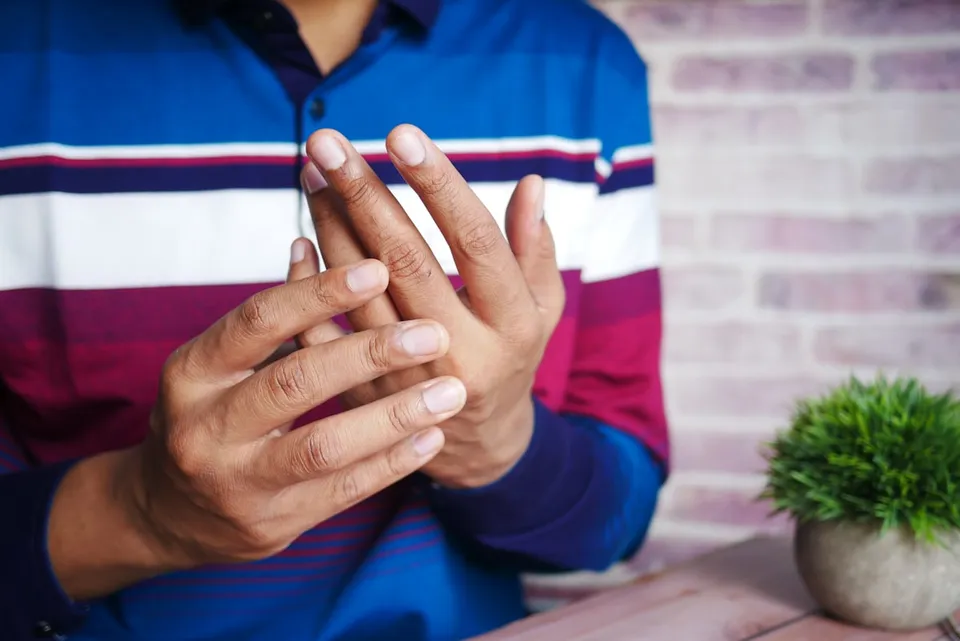
Paraffin bath and hand arthritis
The paraffin bath relieves hand arthritis: less stiffness, more mobility. Protocol, proven benefits and practical tips.
Hand osteoarthritis affects millions of people worldwide, particularly women over 50 and those who heavily use their fingers daily. Morning stiffness, nodules on the joints, pain on pressure: everyday tasks become a struggle.
Among the non-drug solutions recommended by rheumatologists and physiotherapists, the paraffin bath for arthritis holds a special place. Used for decades in rehabilitation clinics, it is now accessible at home. If you are unfamiliar with the paraffin bath, read our complete guide first.
Hand arthritis: understanding to better relieve
What is digital osteoarthritis?
Osteoarthritis is a progressive degradation of cartilage that protects the bone ends in joints. In the hands, digital osteoarthritis mainly affects:
- Distal interphalangeal joints (Heberden's nodes, at the fingertips)
- Proximal interphalangeal joints (Bouchard's nodes, in the middle of the fingers)
- The base of the thumb (trapeziometacarpal osteoarthritis), particularly disabling for everyday tasks
Hand arthritis symptoms that impact daily life
Hand osteoarthritis is not limited to pain. It causes morning stiffness that can last 15 to 30 minutes, loss of grip strength (difficulty opening a jar, turning a key), and eventually visible finger deformity.
It is this combination of pain + stiffness + loss of mobility that the paraffin bath directly targets in treating arthritis.
How the paraffin bath works on hand arthritis
The thermotherapy mechanism
When you dip your arthritic hands into warm paraffin (45-54 C), the wax solidifies into a uniform layer that moulds to every finger and every joint. This coating maintains a constant heat for 15 to 20 minutes, much longer than a hot water bottle or heating glove.
The deep heat triggers several beneficial reactions for arthritis:
- Local vasodilation: blood vessels dilate, increasing the supply of oxygen and nutrients to the joint tissues affected by arthritis
- Muscle relaxation: the muscles around the joints that keep them under tension relax
- Pain reduction: heat raises the pain perception threshold (analgesic effect via Gate Control)
- Improved viscoelasticity: synovial fluid becomes more fluid, facilitating joint movement
Why paraffin is superior to other heat sources for arthritis
Unlike heating pads or gel packs, paraffin has a unique advantage for arthritic hands: its high specific heat capacity. It slowly and uniformly releases heat as it solidifies, allowing deeper thermal penetration into the small finger joints.
This is exactly why physiotherapists prefer it for treating hand osteoarthritis and finger joint pain.
What the scientific studies say about paraffin and arthritis
Paraffin thermotherapy for hand osteoarthritis is not alternative medicine: it is a therapeutic tool studied in clinical trials and recommended by leading medical institutions.
The Dilek et al. study (2013) -- randomised controlled trial
The landmark study on paraffin baths and hand osteoarthritis is by Dilek et al., published in Archives of Physical Medicine and Rehabilitation in 2013. This single-blind randomised controlled trial followed 56 patients with bilateral hand osteoarthritis. The treated group received paraffin baths 5 times a week for 3 weeks.
Results: the paraffin group showed a significant reduction in arthritic pain at rest and during daily activities, as well as improved grip and pinch strength. The benefits were maintained for 12 weeks after the end of treatment.
Efficacy of Paraffin Bath Therapy in Hand Osteoarthritis: A Single-Blinded Randomized Controlled Trial
Read on PubMed2022 meta-analysis -- Journal of Hand Therapy
A systematic review and meta-analysis published in the Journal of Hand Therapy in 2022 confirmed the effectiveness of the paraffin bath in reducing pain and improving function in arthritic hands. The analysis pooled several randomised controlled trials and concluded that paraffin significantly improves quality of life for patients with osteoarthritis and other hand conditions.
Effectiveness of paraffin bath therapy for the symptoms and function of hand diseases: A systematic review and meta-analysis
Read the abstractOfficial recommendations for hand arthritis
- The American College of Rheumatology (ACR, 2019) conditionally recommends paraffin and thermal modalities for hand osteoarthritis in its guidelines co-published with the Arthritis Foundation.
- EULAR (2018) recommends local heat application (including paraffin) as a useful treatment for digital osteoarthritis.
The paraffin bath prepares the hands for rehabilitation, relieves pain and softens the tissues for more effective and comfortable sessions. The heat prepares the tissues, making passive and active mobilisations more effective.
Practical protocol: paraffin bath for hand arthritis
Before the session
- Wash and dry your hands thoroughly (no cream or oil before the bath)
- Remove rings and jewellery
- Check the temperature: between 45 and 54 C (a thermostat-controlled device like the TheraDawn regulates it automatically)
During the session
- Dip your hand for 3 seconds, remove it and let the wax set (5 seconds)
- Repeat 4 to 5 times to form a thick, uniform layer
- Put on a disposable glove then the fabric mitten to retain the heat
- Wait 15 to 20 minutes -- take the time to relax
- Remove the solidified wax: it peels off like a glove. Put it back in the tank for reuse
For the detailed step-by-step protocol, see our guide on the paraffin bath for hands.
Recommended frequency for hand arthritis
Physiotherapists generally recommend the following protocol for treating hand osteoarthritis with the paraffin bath:
- Intensive phase (weeks 1-4): 3 sessions per week, preferably in the morning to counter arthritis-related morning stiffness, or in the evening to recover after the day
- Maintenance phase (from week 5): 1 to 2 sessions per week to maintain the benefits
- Combine with exercises: after the paraffin bath, take advantage of the restored flexibility to do finger stretching and mobilisation exercises -- this is the exact protocol used in physiotherapy clinics for arthritis
Paraffin bath and arthritis: what to combine it with?
Finger mobilisation exercises for arthritic hands
The paraffin prepares joints affected by arthritis: it relaxes, softens, reduces pain. It is the ideal time to mobilise your fingers. After the bath, follow up with:
- Full hand opening and closing (10 repetitions)
- Thumb-to-finger opposition (10 repetitions)
- Finger extension flat on a table (hold 10 seconds, repeat 5 times)
- Wrist flexion with gentle resistance (if thumb base arthritis)
Orthoses and splints
For trapeziometacarpal osteoarthritis (thumb base arthritis), a resting orthosis worn at night combined with a paraffin bath in the morning often delivers excellent results for pain and stiffness.
Supplements and diet
Some studies suggest that hydrolysed collagen, glucosamine and omega-3 fatty acids may contribute to joint comfort in arthritis. The paraffin bath acts locally and directly on the hands, while these supplements work from the inside -- the two approaches are complementary.
Precautions and contraindications
The paraffin bath is a very safe treatment for arthritic hands, but there are a few situations where it is not recommended:
- Open wound or cut on the treated area
- Active skin condition (weeping eczema, pustular psoriasis)
- Severe circulatory disorders (deep vein thrombosis, advanced arteritis)
- Loss of sensation (advanced diabetic neuropathy) -- risk of undetected burns
- Acute inflammatory arthritis flare-up (red, hot, very swollen joint) -- use cold in this case
Outside these cases, the paraffin bath is risk-free and can be used daily to relieve arthritis. To learn more about the full benefits of the paraffin bath, see our dedicated article.
Frequently asked questions
Is a paraffin bath effective against hand arthritis?
Yes. Several clinical studies confirm that paraffin thermotherapy reduces pain and joint stiffness caused by hand osteoarthritis. The American College of Rheumatology includes it in its non-pharmacological recommendations.
How many paraffin sessions does it take to relieve arthritis?
Relief is felt from the first session (relaxation, soothing warmth). For lasting improvement in mobility and pain, plan for 2 to 3 sessions per week over 4 weeks, then 1 to 2 maintenance sessions.
Is paraffin dangerous for arthritic hands?
No, cosmetic paraffin melts between 45 and 54 C, a gentle and safe temperature. It is only not recommended in cases of open wounds, active skin conditions, severe circulatory disorders or loss of sensation (advanced neuropathy).
Can you use a paraffin bath during an arthritis flare-up?
During an acute inflammatory flare-up (red, hot, very swollen joint), cold is preferable. Wait for the flare to subside, then resume paraffin to relax and loosen the joints. If in doubt, consult your doctor.
What is the difference between paraffin and a hot water bottle for hand arthritis?
Paraffin conforms perfectly to every finger and joint, maintaining constant heat for 15 to 20 minutes. A hot water bottle loses heat quickly and does not cover the small finger joints uniformly.
Can a doctor prescribe a paraffin bath for arthritis?
Paraffin baths are often used in physiotherapy clinics as part of prescribed rehabilitation. A home device allows you to continue the protocol between physiotherapy sessions, without a prescription.
Key takeaways
The paraffin bath is a thermotherapy tool recognised and recommended by rheumatologists and physiotherapists for relieving hand osteoarthritis. It acts directly on arthritic pain, stiffness and joint mobility through deep, uniform heat.
Combined with mobilisation exercises, it forms a complete, natural routine for improving the comfort of your arthritic hands every day. Accessible at home with a suitable device, it allows you to follow the same protocol as in the physiotherapy clinic for arthritis, at your own pace.
Disclaimer: this article is provided for informational purposes only and does not replace medical advice. If you experience persistent pain, consult your doctor or physiotherapist.